
Robotic surgery is changing the way many patients think about hip and knee replacement. For people living with arthritis, joint stiffness, daily pain or reduced mobility, the idea of surgery can feel overwhelming. Add the word “robotic” into the mix, and it is completely normal to have questions.
Does the robot perform the surgery?
Is robotic surgery safer?
Does it mean a faster recovery?
And most importantly, does the surgeon still make the decisions?
Here’s the thing: robotic-assisted surgery is not about replacing the surgeon. It is about giving the surgeon advanced planning tools, real-time information and greater control during specific parts of the procedure.
For Dr Van Der Watt, the value of robotic-assisted technology lies in how it supports precision, planning and patient-specific care. The robot is a tool. The surgeon’s skill, judgement and experience remain central to the outcome.
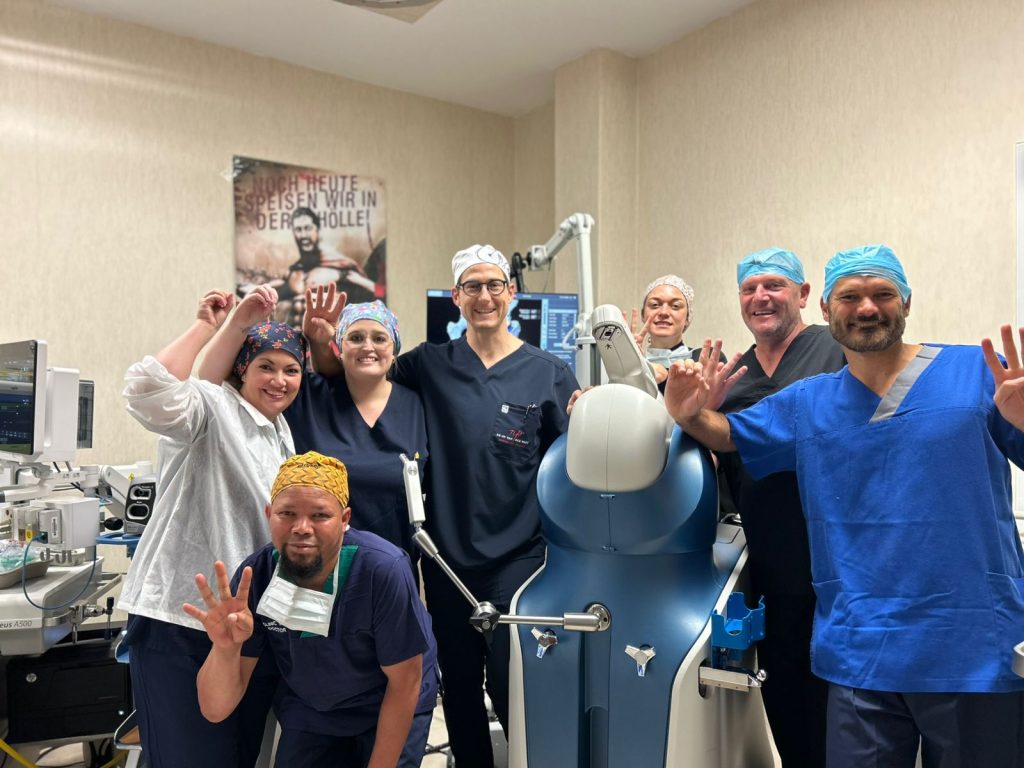
What Is Robotic Surgery in Orthopaedics?
Robotic surgery in orthopaedics usually refers to robotic-assisted joint replacement. It is commonly used in procedures such as total knee replacement, partial knee replacement and total hip replacement.
In joint replacement surgery, damaged bone and cartilage are removed and replaced with artificial components, also called implants. These implants need to be positioned as accurately as possible to support comfort, joint function, stability and long-term performance.
Robotic-assisted systems help the surgeon plan and carry out the procedure with a high level of accuracy. According to the American Academy of Orthopaedic Surgeons, robotic instruments can provide feedback that helps the surgeon precisely remove damaged bone and cartilage and place the prosthetic components.
This does not mean the robot operates on its own. The surgeon guides the procedure and makes the clinical decisions throughout.
How Does Robotic-Assisted Joint Replacement Work?
While each patient and procedure is different, robotic-assisted hip and knee replacement usually follows a structured process.
1. A personalised surgical plan is created
Before surgery, imaging such as a CT scan may be used to create a detailed 3D model of the patient’s joint. This allows the surgeon to assess the unique shape, alignment and condition of the joint before entering theatre.
This planning stage is one of the major benefits of robotic-assisted surgery. Instead of relying only on standard measurements, the surgeon can plan the operation around the patient’s own anatomy.
Stryker’s Mako system, for example, uses 3D CT-based planning to help surgeons prepare for hip and knee replacement procedures.
2. The surgeon maps the joint during surgery
During the procedure, the robotic system helps the surgical team match the patient’s real anatomy to the preoperative plan. This gives the surgeon additional information during the operation and allows for careful adjustments if needed.
3. The robotic arm assists with precision
The robotic arm does not move independently. It assists the surgeon by helping guide certain surgical actions within the planned area. In many systems, built-in boundaries help protect areas that should not be cut.
This is especially important in joint replacement because small differences in bone preparation and implant placement can affect alignment, balance and how the joint feels after surgery.
4. The surgeon remains in control
This point matters.
Robotic-assisted surgery is not automatic surgery. The robot does not decide what to do. The surgeon plans the procedure, controls the instruments and makes the final decisions throughout.
The technology supports the surgeon. It does not replace the surgeon.
Why Precision Matters in Hip and Knee Replacement
Joint replacement surgery is not just about replacing damaged bone. It is about restoring movement, improving function and helping the joint work as naturally and comfortably as possible.
In knee replacement, the surgeon must consider the alignment of the leg, the balance of the ligaments and how the knee moves through its range of motion.
In hip replacement, the surgeon must carefully position the implant to support stability, leg length, movement and reduced risk of complications.
This is where robotic-assisted technology can be valuable. It gives the surgeon a more detailed view of the joint and helps support accurate implant placement.
Research has found that robotic-assisted total knee replacement can improve mechanical alignment accuracy when compared with conventional total knee replacement, although short- to medium-term functional outcomes may not always be significantly better.
What this really means is that robotic surgery can support precision, but the technology alone does not guarantee a perfect result. The surgeon’s planning, decision-making and execution still matter enormously.
The Mako Robot: What Makes It Different?
The Mako robotic system is one of the best-known robotic-assisted platforms used in hip and knee replacement surgery.
Mako technology is designed to help with three key areas:
- Planning
The system helps create a patient-specific surgical plan based on the individual’s anatomy. - Precision
The robotic arm assists the surgeon in staying within the planned surgical boundaries. - Personalisation
The procedure can be adapted to the patient’s joint structure, bone quality and alignment needs.
Stryker describes Mako robotic-arm assisted technology as combining CT-based planning with robotic-arm assistance for hip and knee replacement procedures.
For patients, the main benefit is not that a robot is involved. The benefit is that the surgeon has access to more detailed planning and guidance during the procedure.
Does Robotic Surgery Mean a Faster Recovery?
Many patients ask whether robotic surgery means they will recover faster.
The honest answer is: it may help, but recovery still depends on many factors.
These include:
- The patient’s age and general health
- The severity of the joint damage before surgery
- Muscle strength before the procedure
- The type of surgery performed
- Postoperative physiotherapy
- Weight, lifestyle and medical conditions
- How closely rehabilitation instructions are followed
Some patient-facing Mako resources report that Mako Total Knee can be associated with outcomes such as less pain and shorter recovery times compared with manual surgery. However, not every patient will have the same recovery experience.
A realistic expectation is important. Robotic-assisted surgery can support accurate planning and precise execution, but the body still needs time to heal.
Is Robotic Surgery Less Invasive?
Robotic-assisted joint replacement is sometimes described as more precise, but that does not always mean it is “minor surgery” or that recovery is instant.
Hip and knee replacement are still major surgical procedures. The damaged parts of the joint are replaced with artificial components, and the body needs time to recover.
The potential benefit of robotic-assisted surgery is that it can help the surgeon work according to a highly detailed plan, remove only the necessary bone and place the implant with accuracy.
That precision may support smoother recovery for some patients, but it should never be misunderstood as a shortcut around proper healing and rehabilitation.
Is Robotic Surgery Safe?
Robotic-assisted surgery has become increasingly common in modern orthopaedics, particularly in hip and knee replacement. Like all surgery, it has benefits, risks and limitations.
Potential benefits may include:
- More detailed preoperative planning
- Improved accuracy of implant positioning
- Assistance with joint alignment
- A patient-specific surgical approach
- Controlled bone preparation
- Real-time surgical feedback
Potential risks and considerations include:
- Standard surgical risks such as infection, blood clots, stiffness or ongoing pain
- Longer operating time in some cases
- The need for surgeon experience with the technology
- The possibility that robotic assistance may not improve every outcome for every patient
Research on robotic-assisted knee replacement has shown better alignment accuracy, but studies continue to evaluate long-term outcomes, cost-effectiveness and functional benefits.
There are also surgeon-related technical factors to consider, such as accurate registration, mapping and correct use of the system. A 2024 article discussing Mako robotic-arm-assisted total knee replacement highlighted that robotic technology still depends heavily on surgical technique and correct execution.
This is why choosing the right surgeon matters.
The Robot Is Only as Good as the Surgeon Using It
This is one of the most important points for patients to understand.
Robotic-assisted surgery is advanced, but it is not magic. It does not replace orthopaedic training, surgical experience or clinical judgement.
A robotic system can help with planning and precision, but the surgeon must still:
- Decide whether surgery is appropriate
- Choose the right procedure
- Interpret the imaging
- Plan the implant position
- Balance the joint
- Manage soft tissue
- Respond to findings during surgery
- Guide the patient’s recovery plan
For Dr Van Der Watt, robotic-assisted surgery is used as part of a broader orthopaedic approach. The technology supports the goal, but the surgeon remains responsible for the procedure and the patient’s care.
Who May Benefit from Robotic-Assisted Surgery?
Robotic-assisted hip or knee replacement may be considered for patients with advanced joint damage, especially when pain and stiffness are affecting daily life.
Common reasons patients may need joint replacement include:
- Osteoarthritis
- Rheumatoid arthritis
- Post-traumatic arthritis
- Hip dysplasia
- Avascular necrosis of the hip
- Severe cartilage loss
- Chronic knee or hip pain that no longer responds to conservative treatment
However, robotic-assisted surgery is not automatically the right choice for every patient.
A consultation is needed to assess:
- The condition of the joint
- X-rays or scans
- Pain levels
- Mobility
- Medical history
- Previous treatments
- Activity goals
- Overall surgical risk
The right treatment plan should always be based on the patient, not the technology.
Robotic Knee Replacement
Robotic knee replacement may be used for total knee replacement or partial knee replacement, depending on the extent of the joint damage.
In total knee replacement, the damaged surfaces of the knee joint are replaced with artificial components. In partial knee replacement, only the damaged compartment of the knee is replaced, while healthy parts of the knee are preserved.
Robotic assistance can help the surgeon plan the implant position and prepare the bone according to the patient’s anatomy. This is particularly useful in knees where alignment, ligament balance and joint movement need careful attention.
For patients with arthritis, the goal of knee replacement is usually to reduce pain, improve mobility and help restore quality of life.
Robotic Hip Replacement
Robotic-assisted hip replacement can help with planning and positioning of the hip implant.
Hip replacement requires careful attention to the placement of the cup and femoral components. Implant positioning can influence stability, movement, leg length and how the hip feels after surgery.
With robotic-assisted planning, the surgeon can assess the patient’s hip anatomy in detail before surgery and use that information during the procedure.
Again, the technology assists. The surgeon still performs the operation and makes the decisions.
Common Myths About Robotic Surgery
Myth 1: The robot performs the surgery
This is false. The surgeon performs the surgery. The robot assists according to the surgeon’s plan and control.
Myth 2: Robotic surgery guarantees a perfect result
No surgery can guarantee a perfect result. Robotic-assisted technology can support precision, but outcomes depend on many factors, including the patient’s health, the severity of the joint damage, surgical technique and rehabilitation.
Myth 3: Everyone is a candidate for robotic surgery
Not necessarily. The surgeon must assess each patient individually.
Myth 4: Recovery is instant
Recovery still takes time. Physiotherapy, movement, wound care and strengthening remain important.
Myth 5: The robot matters more than the surgeon
The robot is a tool. The surgeon’s expertise remains the most important factor.
What to Ask During Your Consultation
If you are considering robotic-assisted hip or knee replacement, it helps to ask the right questions.
You may want to ask:
- Am I a candidate for robotic-assisted surgery?
- What type of joint replacement do I need?
- What are the benefits in my specific case?
- What are the risks?
- What will recovery look like?
- How long before I can walk comfortably?
- When can I return to work or normal activities?
- What role will physiotherapy play?
- How experienced is the surgical team with the robotic system?
A good consultation should help you understand your options clearly and make an informed decision.
Why Patient-Specific Planning Matters
No two joints are exactly the same. One patient may have severe bowing of the knee. Another may have previous trauma. Another may have hip anatomy that requires especially careful planning.
Robotic-assisted technology allows the surgeon to plan around those individual differences.
This is one of the most valuable parts of the technology. Instead of a one-size-fits-all approach, the procedure can be planned with the patient’s own anatomy in mind.
For Dr Van Der Watt, this supports a more measured and thoughtful approach to joint replacement.
Life After Robotic-Assisted Joint Replacement
The goal of hip or knee replacement is not simply to complete a surgical procedure. The goal is to help patients move better, reduce pain and return to a more active daily life.
After surgery, patients will usually follow a recovery plan that includes:
- Pain management
- Early movement
- Physiotherapy
- Walking support as needed
- Wound care
- Follow-up appointments
- Gradual return to normal activities
The recovery process is a partnership between the surgeon, the rehabilitation team and the patient.
Robotic-assisted surgery can support precision in theatre, but long-term success also depends on what happens after surgery.
Final Thoughts: Technology Matters, but Expertise Matters More
Robotic surgery is an exciting advancement in orthopaedic care. For hip and knee replacement, it can support detailed planning, accurate implant placement and a more personalised surgical approach.
But patients should remember this: the robot is not the surgeon.
The best outcomes come from combining advanced technology with experienced clinical judgement, careful planning and a clear understanding of each patient’s needs.
If you are struggling with hip or knee pain and want to know whether robotic-assisted joint replacement may be right for you, the next step is a consultation.
Book a Consultation with Dr Van Der Watt
Dr Van Der Watt offers expert orthopaedic care with a focus on hip and knee conditions, including robotic-assisted joint replacement where appropriate.
Book an appointment to discuss your symptoms, review your treatment options and find out whether robotic surgery may be suitable for your joint condition.
Frequently Asked Questions About Robotic Surgery
Does the robot perform the surgery?
No. The robot does not perform the surgery on its own. Dr Van Der Watt remains in control throughout the procedure. The robotic system assists with planning, precision and guidance, but the surgeon makes the decisions and performs the operation.
What is robotic-assisted joint replacement?
Robotic-assisted joint replacement is a surgical approach where advanced robotic technology helps the surgeon plan and carry out hip or knee replacement with greater accuracy. It can help with implant positioning, bone preparation and patient-specific surgical planning.
Is robotic surgery better than traditional surgery?
Robotic-assisted surgery can offer benefits such as detailed planning, improved precision and more accurate implant placement. However, it is not automatically “better” for every patient. The best approach depends on your joint condition, anatomy, health and surgical goals.
Can robotic surgery be used for both hip and knee replacement?
Yes. Robotic-assisted technology can be used in both hip and knee replacement procedures. It is commonly used for total knee replacement, partial knee replacement and total hip replacement, depending on the patient’s condition and suitability.
Is robotic surgery less painful?
Some patients may experience less pain after robotic-assisted surgery, especially when the procedure allows for accurate planning and controlled bone preparation. However, every patient heals differently, and pain levels can depend on factors such as age, fitness, joint damage, medical history and rehabilitation.
Does robotic surgery mean a faster recovery?
Robotic-assisted surgery may support a smoother recovery for some patients, but it does not remove the need for proper healing, physiotherapy and follow-up care. Recovery still depends on the type of procedure, the patient’s overall health and how well rehabilitation instructions are followed.
Is robotic surgery safe?
Robotic-assisted surgery is widely used in modern orthopaedics, but like all surgery, it carries risks. These may include infection, blood clots, stiffness, ongoing pain or complications related to the implant. A consultation with Dr Van Der Watt will help determine whether this approach is suitable for your specific case.
Who is a good candidate for robotic-assisted surgery?
Patients with advanced hip or knee arthritis, severe joint pain, stiffness, reduced mobility or joint damage that no longer responds to conservative treatment may be considered for robotic-assisted joint replacement. Suitability is assessed during consultation using your symptoms, medical history and imaging.
Do I still need physiotherapy after robotic surgery?
Yes. Physiotherapy remains an important part of recovery after hip or knee replacement. The robotic system assists during surgery, but rehabilitation helps restore strength, mobility, balance and confidence after the procedure.
How long does recovery take after robotic hip or knee replacement?
Recovery varies from patient to patient. Some patients begin walking with assistance soon after surgery, but full recovery can take weeks to months. Your recovery timeline will depend on the type of surgery, your overall health, your fitness before surgery and your rehabilitation plan.
What is the Mako robot?
The Mako robot is a robotic-arm assisted system used in certain hip and knee replacement procedures. It helps the surgeon create a personalised surgical plan and provides guidance during the procedure to support accurate implant placement.
Why does the surgeon’s experience matter if a robot is involved?
The robot is only a tool. The surgeon still plans the procedure, controls the system, prepares the joint, positions the implant and manages any decisions during surgery. Dr Van Der Watt’s orthopaedic expertise is what brings the technology and patient care together.
Will robotic surgery leave a smaller scar?
Not necessarily. Robotic-assisted surgery is focused on precision and planning rather than scar size. The incision depends on the type of surgery, your anatomy and the surgical approach needed for your joint replacement.
Can robotic surgery guarantee a perfect result?
No surgery can guarantee a perfect result. Robotic-assisted technology can support accuracy and planning, but outcomes still depend on many factors, including your joint condition, overall health, surgical complexity and recovery process.
How do I know if robotic-assisted surgery is right for me?
The best way to find out is to book a consultation with Dr Van Der Watt. He will assess your symptoms, examine your joint, review your imaging and discuss whether robotic-assisted hip or knee replacement is suitable for your condition.