
If you are considering knee replacement surgery, there is one question that tends to come up very early:
How long will the new knee actually last?
It is an important question, particularly for patients considering surgery at a younger age.
Knee replacements are designed for long-term use, but no artificial joint can be guaranteed to last forever.
Large-scale research using national joint replacement registry data found that approximately 93% of total knee replacements remained unrevised at 15 years, 90% at 20 years and 82% at 25 years.
That is encouraging, but it does not mean every knee will last exactly the same length of time.
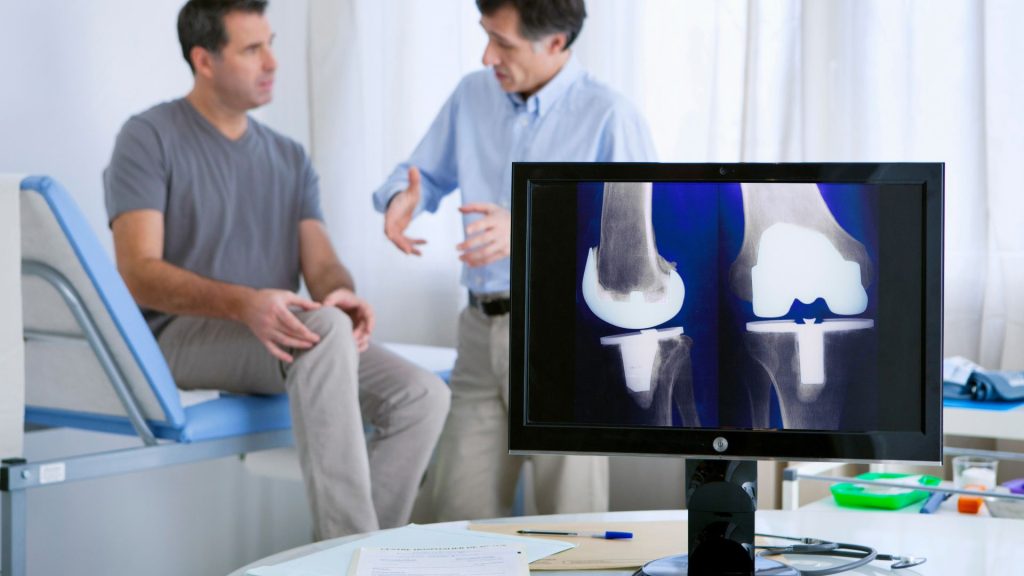
What Does It Mean When We Say a Knee Replacement “Lasts”?
Researchers commonly measure implant survival by whether the original replacement remains in place without requiring revision surgery.
Revision knee replacement means another operation is performed to replace or repair one or more parts of the artificial joint.
A knee may need revision for reasons including:
- Implant loosening
- Wear over time
- Infection
- Instability
- Fracture around the replacement
- Persistent problems with the implant
Most patients will never experience all of these problems, but understanding them helps put implant lifespan into context.
Can a Knee Replacement Last 20 Years?
Yes.
Long-term evidence shows that many knee replacements remain functioning beyond 20 years.
In the large systematic review of registry data, around 90% of total knee replacements remained in place at 20 years.
Modern materials, improved implant design, better surgical planning and advances in joint replacement have all contributed to strong long-term outcomes.
But implant longevity is affected by more than the implant itself.
What Affects How Long a Knee Replacement Lasts?
1. Your Age When You Have Surgery
A younger patient may simply have more years in which the implant is used.
Someone receiving a knee replacement in their 50s may place decades of activity through that joint, increasing the lifetime possibility of eventually requiring revision.
That does not mean younger patients should automatically postpone surgery.
The decision must balance long-term implant considerations against the effect of severe pain and disability on quality of life.
2. Activity Level
Movement is important after knee replacement.
Patients are not expected to sit still to protect their implant.
However, repeated high-impact loading can place more stress on an artificial joint than lower-impact activities.
After appropriate recovery, activities such as walking, swimming and cycling are commonly used to maintain fitness without the repetitive impact associated with activities such as running and jumping. MedlinePlus advises protecting an artificial knee by maintaining physical activity while favouring lower-impact options.
Your surgeon can give you individual advice based on your implant and goals.
3. Body Weight
Body weight affects the forces passing through the knee.
Maintaining a healthy weight where possible is beneficial not only for your artificial joint but also for general health and mobility.
4. Implant Positioning
Knee replacement is not simply about putting new components into the joint.
The surgeon must consider:
- Bone preparation
- Implant size
- Implant positioning
- Alignment
- Ligament balance
- Knee stability
- Range of motion
This is one reason surgical planning and technique matter so much.
5. Your Overall Health
Conditions affecting bone health, infection risk and general recovery may influence outcomes.
This is why preparation for surgery includes a full medical assessment, not just looking at the knee.
Will a Robotic Knee Replacement Last Longer?
This is an understandable question, but it is important not to make claims that current long-term evidence cannot yet prove.
Robotic-assisted systems can help the surgeon plan and execute parts of knee replacement with a high degree of precision.
The Mako system, for example, uses CT-based 3D planning and robotic-arm assistance.
Precise planning and component positioning are valuable aspects of joint replacement surgery, but implant longevity still depends on multiple factors, including implant choice, patient characteristics, surgical technique and activity over many years.
The robot is a tool that assists the surgeon. It does not guarantee how long an implant will last.
What Can You Do to Help Protect Your Knee Replacement?
Once you have recovered from surgery, long-term joint care matters.
Maintain a Healthy Weight
Reducing unnecessary load on the joint can help protect both the artificial knee and the rest of your musculoskeletal system.
Keep Moving
Regular physical activity helps maintain:
- Strength
- Balance
- Mobility
- Cardiovascular health
- Bone health
Your exercise programme should be appropriate for your stage of recovery and individual circumstances.
Build Strong Muscles
Strong muscles around the hip, thigh and knee help support movement and joint control.
This is one reason rehabilitation remains important even once the surgical wound has healed.
Choose Activity Wisely
A knee replacement is intended to help you return to a more active life.
However, the activities you choose should be discussed with your surgeon, particularly if you participate in demanding or high-impact sport.
Attend Follow-Up Appointments
Follow-up gives your surgeon an opportunity to assess the joint and investigate any new symptoms before they become more serious.
What Are Signs That a Knee Replacement May Be Wearing Out?
If a previously comfortable knee replacement begins causing new symptoms years later, it should be assessed.
Potential warning signs can include:
- New or increasing pain
- Swelling
- Reduced mobility
- Instability
- A feeling that the knee is giving way
- Persistent stiffness
- New difficulty walking
These symptoms do not automatically mean the implant has failed. They can have several causes, which is why proper examination and imaging may be necessary.
What Happens If a Knee Replacement Wears Out?
When an artificial knee develops a significant problem, revision knee replacement may be required.
Revision surgery is different from the original operation because existing components may need to be removed and there may be changes to the surrounding bone.
This is one reason the possibility of revision is discussed particularly carefully with younger patients.
However, fear of possibly needing revision decades later should not be considered in isolation.
Severe knee arthritis can also carry a major cost in lost mobility, reduced exercise, chronic pain and declining quality of life.
The decision involves balancing those factors.
Should I Delay Knee Replacement So It Lasts for the Rest of My Life?
Not necessarily.
There is a difference between appropriately delaying surgery while symptoms remain manageable and postponing it despite severe disability purely because of implant lifespan.
Current osteoarthritis guidance recommends considering joint replacement when symptoms are substantially affecting quality of life and non-surgical management has become ineffective or unsuitable.
Your age is part of that conversation, but not the only factor.
Why the Surgeon Matters
Patients understandably spend time researching implant brands, robots and surgical technology.
But joint replacement is not simply a product.
The surgeon must evaluate your knee, understand your symptoms, select an appropriate treatment strategy, plan the operation and execute that plan.
Advanced technology can support that process, but it does not replace orthopaedic expertise.
Frequently Asked Questions
What is the average lifespan of a knee replacement?
Many knee replacements last 15 to 20 years and beyond. Large registry-based research found approximately 82% of total knee replacements remained unrevised at 25 years.
Can a knee replacement last 30 years?
Some do. However, it is not possible to guarantee a specific lifespan for an individual implant.
What makes a knee replacement wear out faster?
Factors can include age at surgery, activity, body weight, implant factors and certain complications such as infection or loosening.
Does walking wear out a knee replacement?
Normal walking is an important part of staying healthy and active after appropriate recovery. Patients should follow individual advice regarding high-impact activities.
What happens when a knee replacement wears out?
Some patients may require revision knee replacement, where part or all of the original prosthesis is replaced.
Is it better to wait as long as possible before knee replacement?
Not necessarily. Surgery should be timed according to symptoms, function, overall health, treatment response and individual goals rather than delaying solely because of age.
Does robotic knee surgery guarantee the replacement will last longer?
No. Robotic assistance can support patient-specific planning and surgical precision, but it cannot guarantee implant lifespan.
Should younger people avoid knee replacement?
Not automatically. Younger age can increase the lifetime possibility of needing revision, but severe pain and disability must also be considered.
Thinking About Knee Replacement?
You deserve a treatment decision based on more than a number on a calendar.
Dr Van Der Watt can assess your knee, review the extent of joint damage, discuss treatments already attempted and help you understand the benefits and considerations of knee replacement in your individual situation.
Book a consultation with Dr Van Der Watt to discuss your knee and your long-term options.