
“Am I too young for a knee replacement?”
“I’ve been told to wait until I’m 65.”
“Am I too old to have major joint surgery?”
These are common concerns for people living with severe knee arthritis.
The idea that there is one perfect age for knee replacement sounds reassuringly simple.
But it is not how joint replacement decisions actually work.
There is no single age at which everyone should have a knee replacement.
The decision depends on the severity of your symptoms, how much function you have lost, your general health, what treatments you have already tried and what you want to be able to do.
Current NICE guidance states that people should not be excluded from referral for joint replacement because of age alone.
So instead of asking only “How old am I?”, there are several more useful questions to consider.
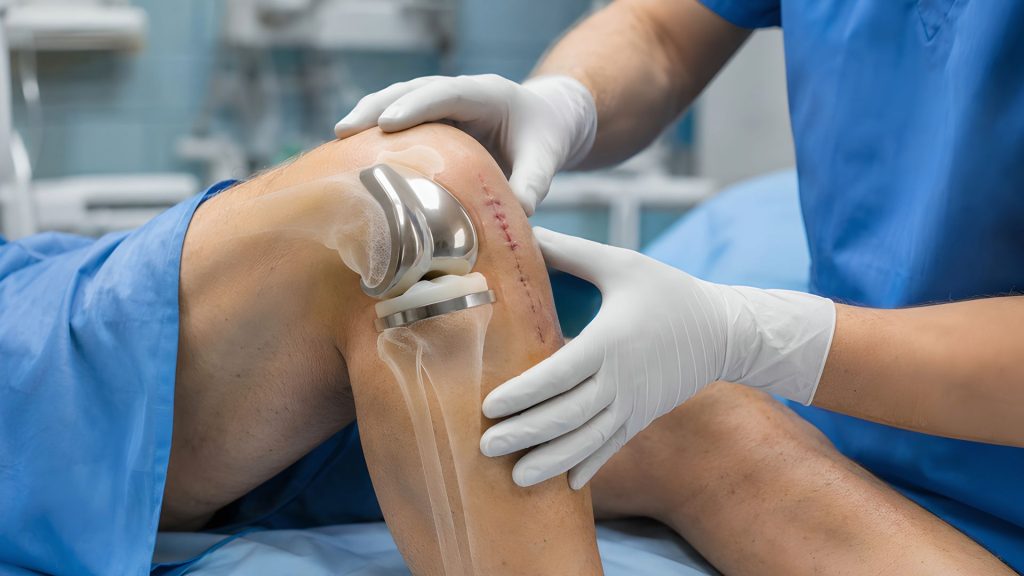
Why Did People Historically Wait Until They Were Older?
Artificial joints do not last forever.
Historically, surgeons were understandably cautious about replacing a joint in younger patients because a younger patient has more years in which the implant could eventually wear or require revision.
That remains a relevant consideration.
But waiting also has consequences.
Years of severe knee pain can affect:
- Mobility
- Fitness
- Sleep
- Independence
- Weight
- Mental wellbeing
- Participation in work and family life
The correct timing therefore involves balancing implant longevity with current quality of life.
Can You Be Too Young for Knee Replacement?
There is no universal minimum age.
A patient in their 40s or 50s with severe joint destruction and major functional limitation presents a very different situation from someone of the same age with manageable symptoms.
Younger patients need to understand that they may have a greater lifetime chance of requiring revision surgery because they are likely to live with the implant for longer.
But age should not be considered in isolation.
The question becomes:
How badly is this knee affecting your life today, and what is the likely benefit of surgery compared with continuing as you are?
Is 50 Too Young for Knee Replacement?
Not automatically.
A 50-year-old with severe arthritis who can barely walk, cannot work comfortably and has exhausted appropriate conservative treatments may need a very different discussion from a 50-year-old who has mild discomfort only after sport.
The diagnosis matters.
Symptoms matter.
Function matters.
Lifestyle matters.
Age is one factor in that broader assessment.
Is 60 a Good Age for Knee Replacement?
Many patients undergo knee replacement in their 60s, but turning 60 is not in itself a reason to have surgery.
If your symptoms remain manageable and you can continue participating in daily life, surgery may not yet be required.
If severe arthritis is substantially affecting mobility and quality of life despite appropriate treatment, then replacement may be considered.
The calendar does not decide.
Your knee and your life do.
What About Knee Replacement in Your 70s?
Research examining age and total knee replacement has found good patient-reported outcomes among patients in their 70s, although age remains only one element of surgical risk and decision-making.
Many people in their 70s remain highly active and want to:
- Travel
- Walk
- Golf
- Garden
- Exercise
- Care for grandchildren
- Maintain independence
The goal of treatment is not simply to extend years of life. It is to preserve meaningful function and quality of life wherever reasonably possible.
Can You Be Too Old for Knee Replacement?
Age alone does not create an automatic upper limit.
What becomes increasingly important is overall health and surgical risk.
An orthopaedic assessment may consider factors such as:
- Heart health
- Lung health
- Diabetes
- Kidney function
- Bone quality
- Mobility
- Frailty
- Medication
- Previous medical conditions
- Ability to participate in rehabilitation
A healthy 80-year-old may have a very different risk profile from someone younger with multiple serious medical conditions.
What Matters More Than Age?
1. How Much Pain You Have
Is the knee painful only after demanding activity, or is it hurting during ordinary walking?
Does it ache when you are resting?
Does it wake you at night?
Pain patterns help show how severely the knee is affecting daily life.
2. How Much Function You Have Lost
Can you still:
- Walk the distances you need to?
- Climb stairs?
- Work?
- Exercise?
- Shop independently?
- Travel?
- Get up from a chair comfortably?
Loss of function is a major part of the decision.
3. Whether Non-Surgical Treatment Still Works
Knee osteoarthritis can often be managed for years without replacement surgery.
Treatment may include therapeutic exercise, weight management where relevant, pain management and other appropriate interventions.
Replacement becomes more relevant when appropriate treatments no longer provide enough relief.
4. What Your Imaging Shows
X-rays help assess the degree and pattern of joint damage.
But the X-ray must be interpreted alongside your symptoms.
A severe-looking X-ray in someone functioning reasonably well does not automatically mean surgery is required.
5. Your General Health
Your overall health affects both the risks of surgery and recovery.
Optimising medical conditions before surgery is an important part of preparing for joint replacement.
6. Your Expectations
What do you want surgery to allow you to do?
A clear discussion about expectations helps ensure that the goals of surgery are realistic.
Why Waiting Too Long Is Not Always Better
Patients are sometimes proud of how long they have “put up with” their knee.
But there is no prize for tolerating unnecessary disability.
If knee pain results in years of inactivity, patients may lose:
- Muscle strength
- Cardiovascular fitness
- Confidence
- Mobility
That does not mean surgery should be rushed.
It means the timing decision should balance both sides of the equation rather than focusing exclusively on how long the artificial joint might last.
Why Having Surgery Too Early Is Also Not Ideal
A knee replacement is major surgery.
If symptoms remain mild and appropriate conservative treatments allow you to live normally, replacement may offer little reason to accept surgical risks at that stage.
The purpose of knee replacement is to treat significant joint disease that is limiting life.
It is not preventative surgery for a knee that may become worse one day.
What About Robotic-Assisted Knee Replacement?
For appropriate patients, robotic-assisted technology can be incorporated into knee replacement planning and surgery.
Mako uses CT-based three-dimensional information as part of patient-specific planning and robotic-arm assisted execution.
This can provide the surgeon with detailed information about the patient’s anatomy and planned procedure.
But technology does not determine whether you need surgery.
That decision still begins with your diagnosis, symptoms and individual circumstances.
So, What Is the Best Age for Knee Replacement?
The best time is not defined by a birthday.
It is the point at which:
- The diagnosis is clear
- Symptoms significantly affect quality of life
- Appropriate non-surgical treatments are no longer giving sufficient relief
- You understand the benefits and risks
- Your health has been appropriately assessed
- You and your surgeon agree that surgery is the most suitable next step
That could occur at a different age for every patient.
Frequently Asked Questions
What is the most common age for knee replacement?
Knee replacement is frequently performed in older adults, but there is no single age that determines whether someone is suitable for surgery.
Is 50 too young for a knee replacement?
Not necessarily. Younger patients need to consider the greater lifetime possibility of revision surgery, but severe symptoms and loss of function may still make replacement appropriate.
Is 60 too young?
No fixed rule says that someone must wait beyond 60. Suitability depends on the individual patient.
Can an 80-year-old have knee replacement surgery?
Potentially, yes. Overall health, surgical risk, mobility and likely benefit are more useful than age alone.
Should I wait until I cannot walk?
No. You do not need to reach complete disability before discussing surgery. If pain and reduced function substantially affect your life, an assessment is reasonable.
Is knee replacement more difficult if I wait too long?
Every situation is different. Severe joint deformity, reduced strength and declining general fitness may make the overall journey more challenging, which is why timing should be discussed individually.
How do I know whether now is the right time?
An orthopaedic consultation can bring together your symptoms, examination, X-rays, treatment history, overall health and personal goals to help answer that question.
Your Age Doesn’t Tell the Whole Story
If you keep asking yourself whether you are too young, too old or whether you should simply keep waiting, it may be time to stop guessing.
A consultation does not commit you to surgery.
It gives you the information needed to understand where your knee is now and what your realistic options are.
Book an assessment with Dr Van Der Watt to discuss the right timing for your knee.